PapaDlish Whole Wheat Sourdough Bread
40% Whole Wheat · One Artisan Loaf · Overnight Cold Proof
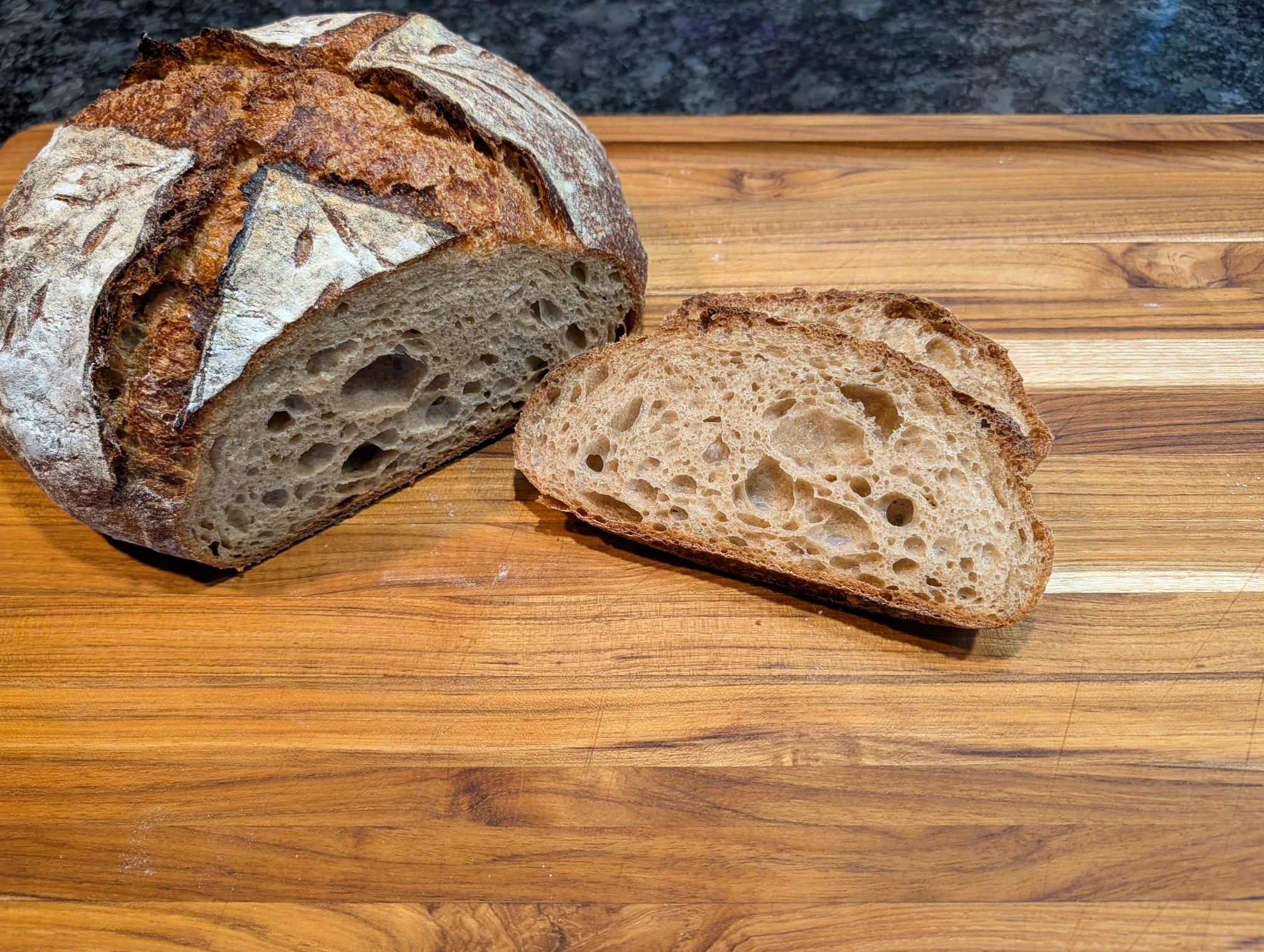
A hearty, flavorful whole wheat sourdough with a chewy golden crust and a softer, tender crumb. Bread flour gives this loaf strength, while whole wheat adds nutty flavor. A little honey and olive oil round out the texture without overpowering the sourdough.
Recipe by Papa D | PapaDlish Test Kitchen
What Makes This Whole Wheat Sourdough Different?
Using 300 g bread flour and 200 g whole wheat flour gives a balanced 60/40 flour blend. The starter adds fermentation flavor; honey and olive oil help keep the interior pleasantly tender. This dough is approximately 74% hydration including the starter.
| Hands-on | About 35–50 minutes |
|---|---|
| Bulk Ferment | Approximately 4 hours at 82°F; judge by rise |
| Cold Proof | Approximately 12 hours at 38°F |
| Yield | One loaf · 1,041 g dough |
| Bake | About 55–70 minutes, cold-start Dutch oven |
Ingredients
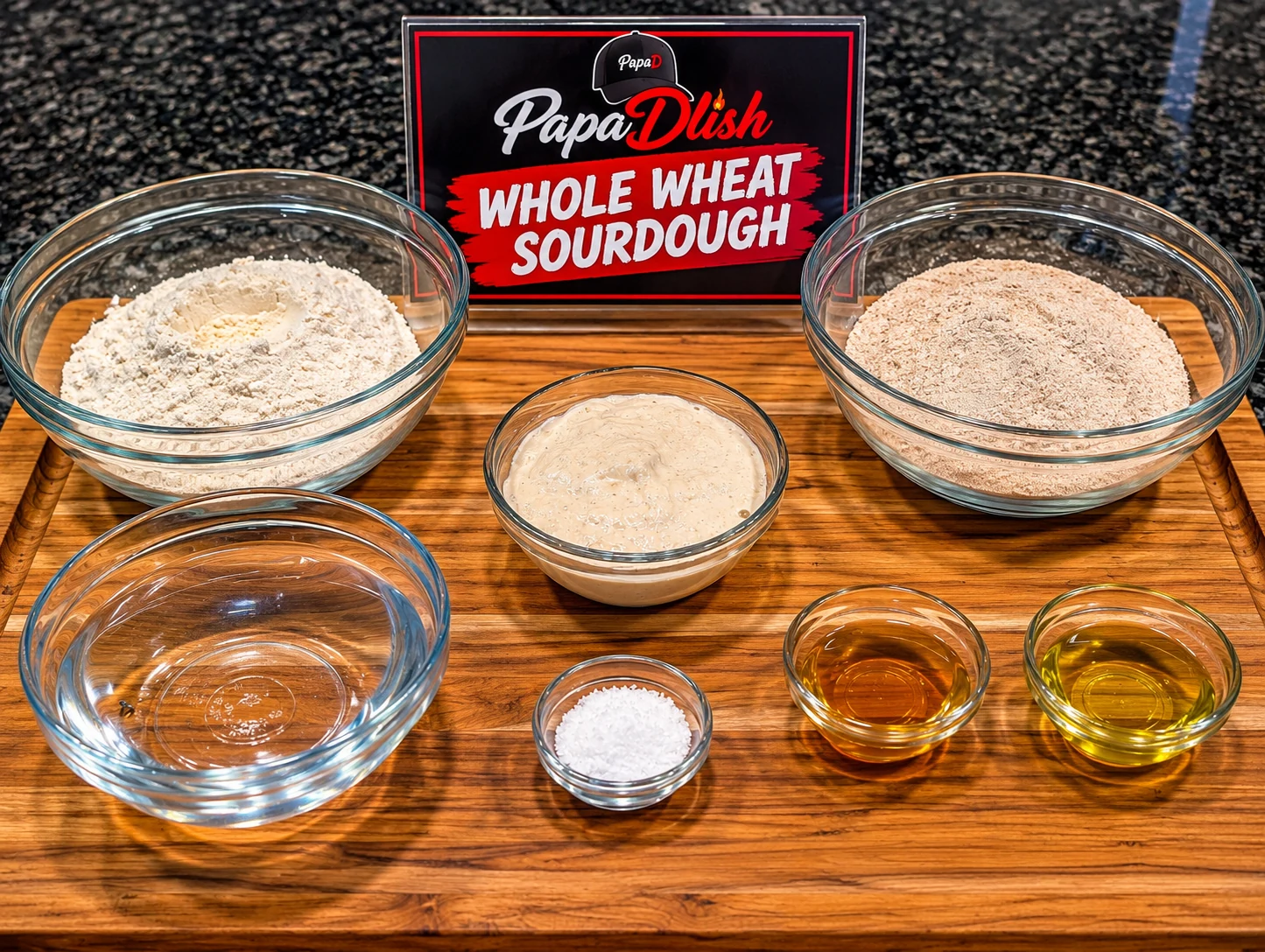
| Amount | Ingredient |
|---|---|
| 300 g | Bread flour |
| 200 g | Whole wheat flour |
| 350 g | Water |
| 150 g | Active sourdough starter (100% hydration) |
| 15 g | Honey |
| 15 g | Extra-virgin olive oil |
| 11 g | Salt |
| 1,041 g | Total dough |
Baker’s percentages (based on 500 g added flour): bread flour 60%, whole wheat 40%, water 70%, starter 30%, honey 3%, oil 3%, salt 2.2%. Including the 100%-hydration starter, overall hydration is 73.9%.
Directions
- Combine the bread flour, whole wheat flour and 330 g of the water. Mix until no dry flour remains; rest covered for 20–30 minutes to hydrate the whole wheat.
- Add the active starter, honey, olive oil and salt. Mix until evenly incorporated. Add the remaining 20 g water gradually if the dough can absorb it.
- Bulk ferment covered at about 82°F, roughly 4 hours depending on dough activity. During the first 2 hours, perform 3–4 sets of stretch-and-folds spaced 30–45 minutes apart. Stop bulk when dough is noticeably aerated, domed and about 60–75% larger, not solely when a timer rings.
- Turn onto a lightly damp or floured surface, gently preshape into a round and rest 20–30 minutes. Final-shape with surface tension without crushing the gas.
- Place seam-up in a rice-floured banneton, cover and refrigerate about 12 hours at 38°F. If dough is already very puffy, shorten the cold proof.
- Turn the cold loaf onto parchment and score decisively. For a cold-start bake, place parchment and dough in a room-temperature Dutch oven that its manufacturer permits using from cold.
- Cover, place in the cold oven, set to 450°F and bake approximately 45–50 minutes including oven warm-up. Remove the lid, lower to 425°F and bake another 10–20 minutes until deeply browned and the center reaches roughly 205–210°F. Oven timing varies; check the loaf rather than relying on the clock.
- Cool on a wire rack for at least 2 hours before slicing.
PapaDlish Tips
- Hold back a little water initially: whole wheat absorption varies by brand and milling.
- Use rice flour in the banneton to reduce sticking.
- Score the loaf cold to help direct expansion and keep the pattern neat.
- Only use the cold-start method if your Dutch oven is approved for it. A preheated Dutch oven requires a different baking schedule.
- Let the loaf cool before slicing so the crumb can finish setting.
Papa D’s Test Kitchen Notes — Cold vs. Hot Dutch Oven
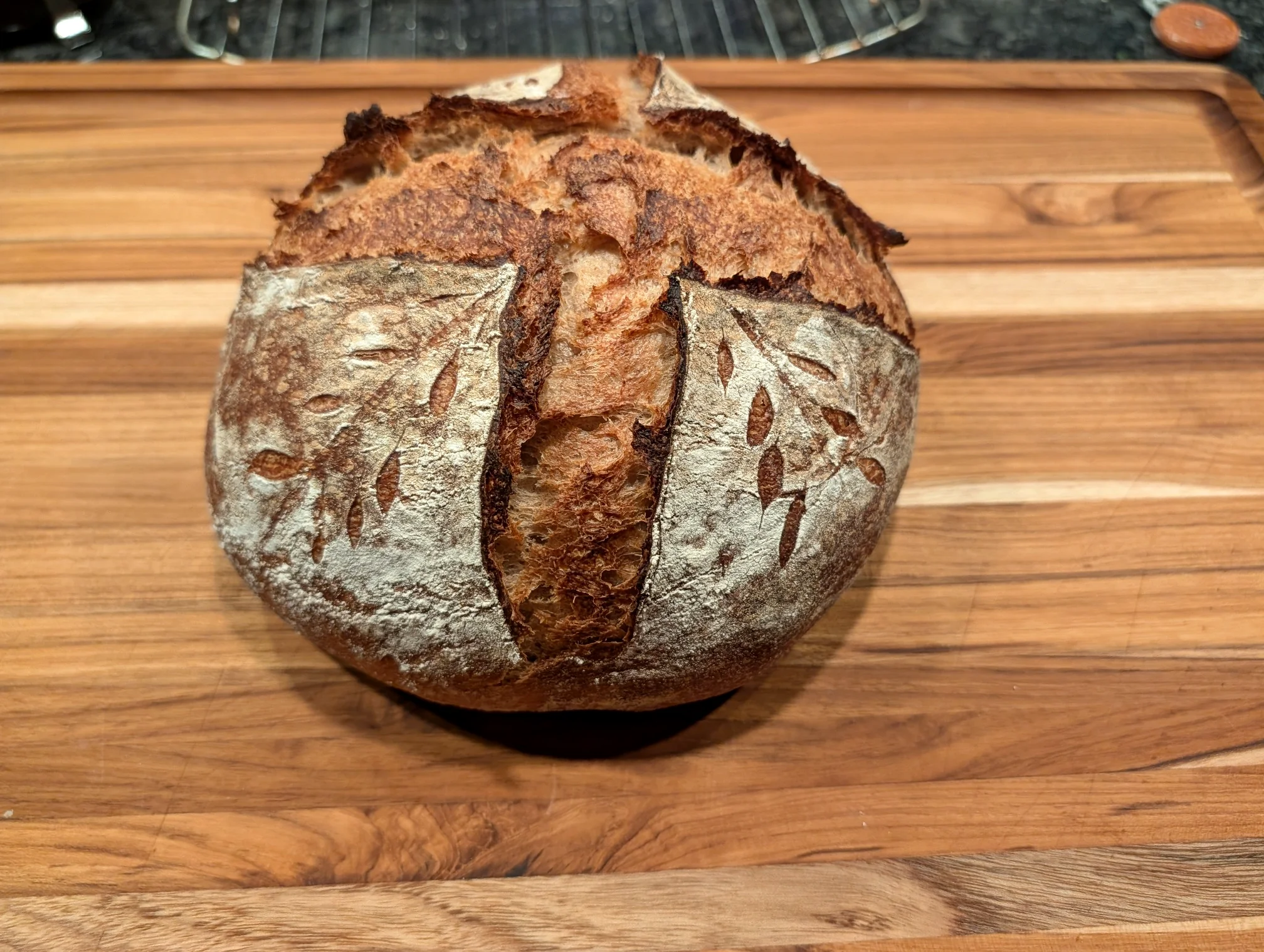
In previous tests using a preheated Dutch oven, I’ve experienced uncontrolled expansion and blowouts along the sides of my sourdough loaves. Switching to a cold-start Dutch oven has given me better results, allowing the dough to heat more gradually and expand more predictably through the scoring.
While a cold start isn’t guaranteed to prevent blowouts, it’s become my preferred method for achieving a more controlled rise and a cleaner-looking loaf.
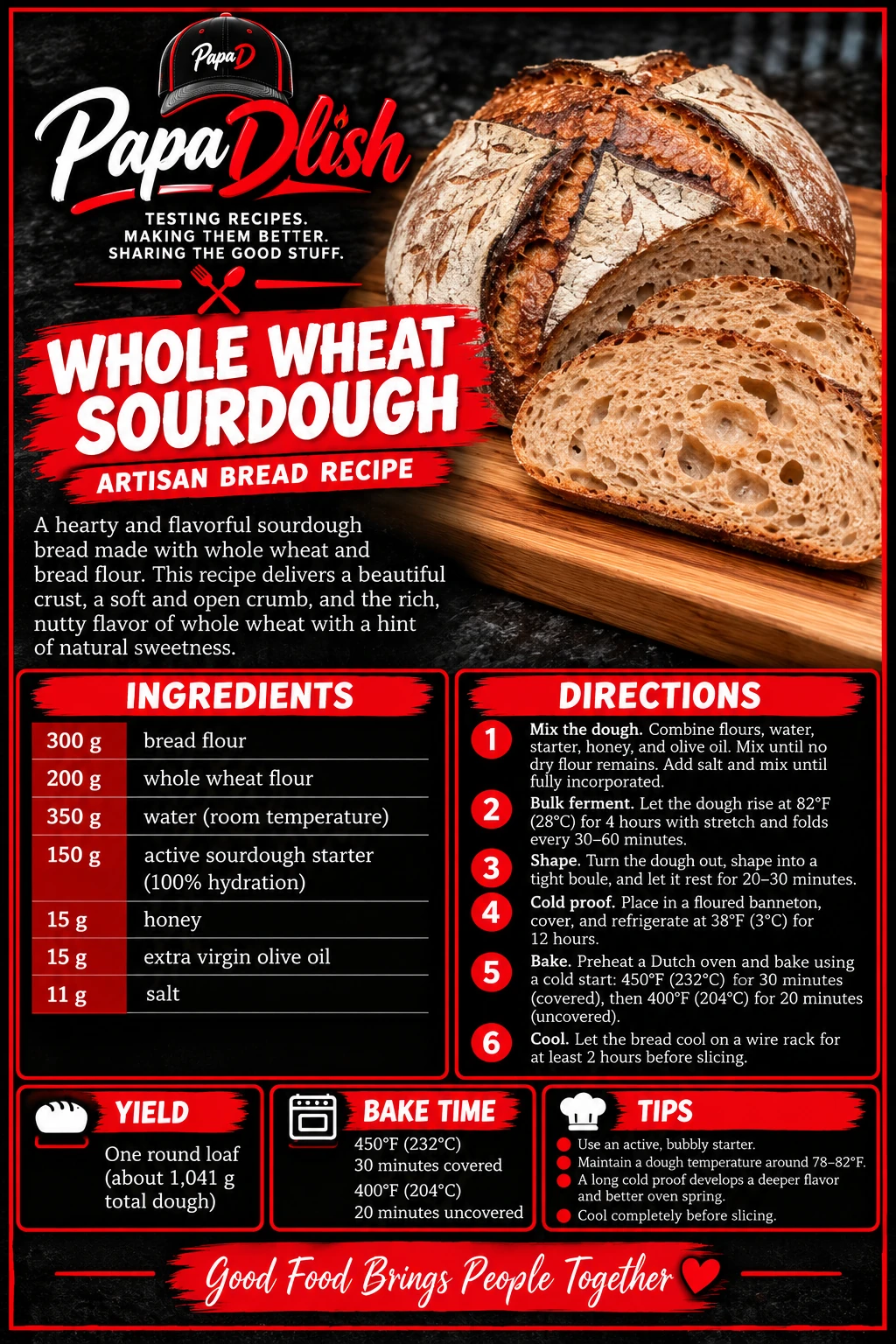
Save the PapaDlish Recipe Card
Made This Recipe?
Tell Papa D how your loaf turned out, or browse more of our tested bread recipes.
Leave a Reply