PapaDlish Light Rye Sourdough Bread
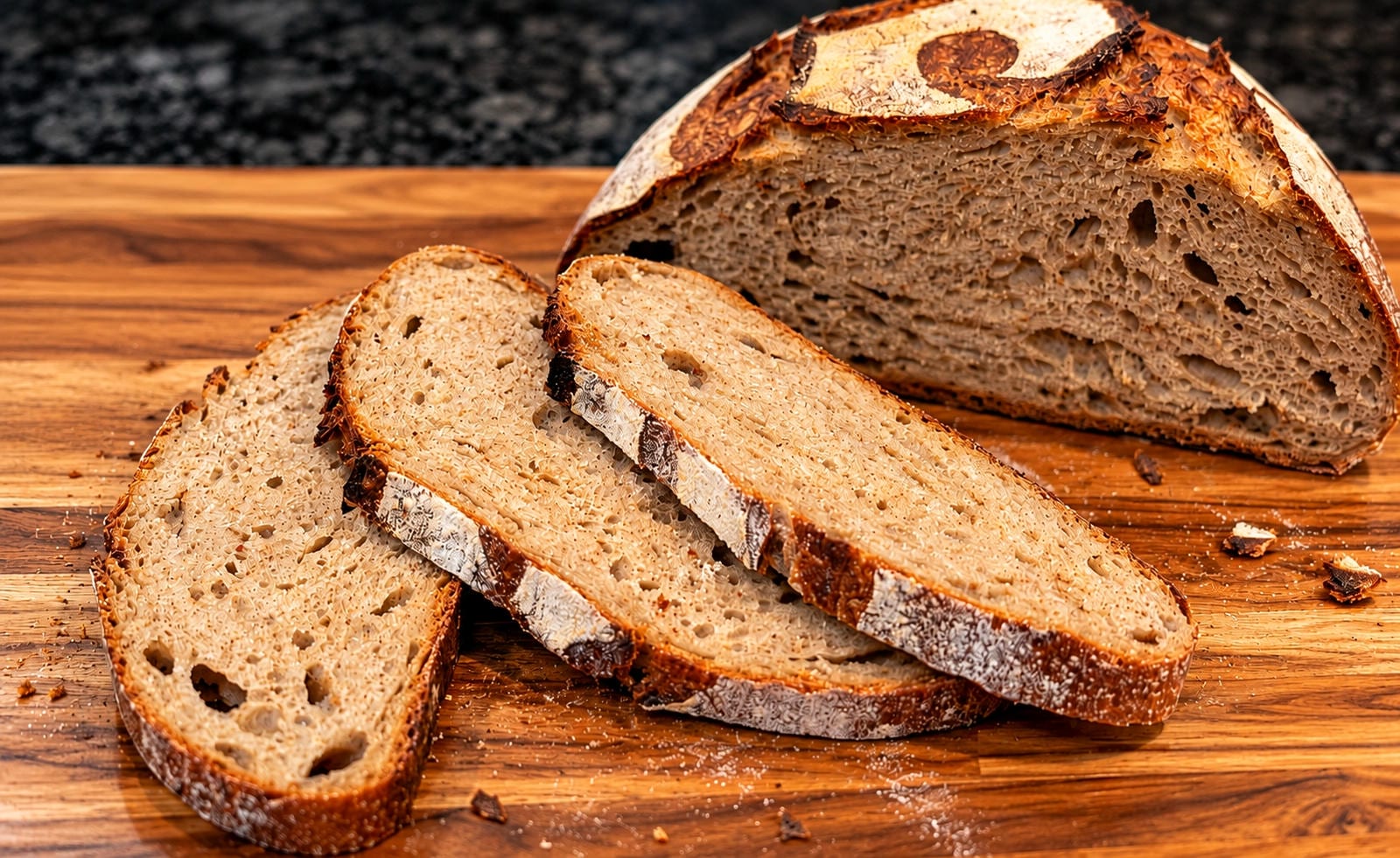
A light rye sourdough with a soft, moist interior and a beautifully browned artisan crust. Made with rye, whole wheat, bread flour, a touch of honey and oil—substantial enough for artisan slices, tender enough for sandwiches.
What Makes This Light Rye Different?
Rye and whole wheat bring a hearty flavor while bread flour supplies the structure. Honey and a little oil keep the crumb pleasantly tender without turning it into a heavily enriched sandwich loaf. The dough is cold-proofed overnight and baked in a Dutch oven from a cold start.
| Prep Time | 30–45 min hands-on |
|---|---|
| Bulk Ferment | 4 hr at 82°F |
| Cold Proof | 12 hr at 38°F |
| Yield | One 1,056 g dough boule |
| Bake | 55–65 min, cold start |
Ingredients
| Amount | Ingredient |
|---|---|
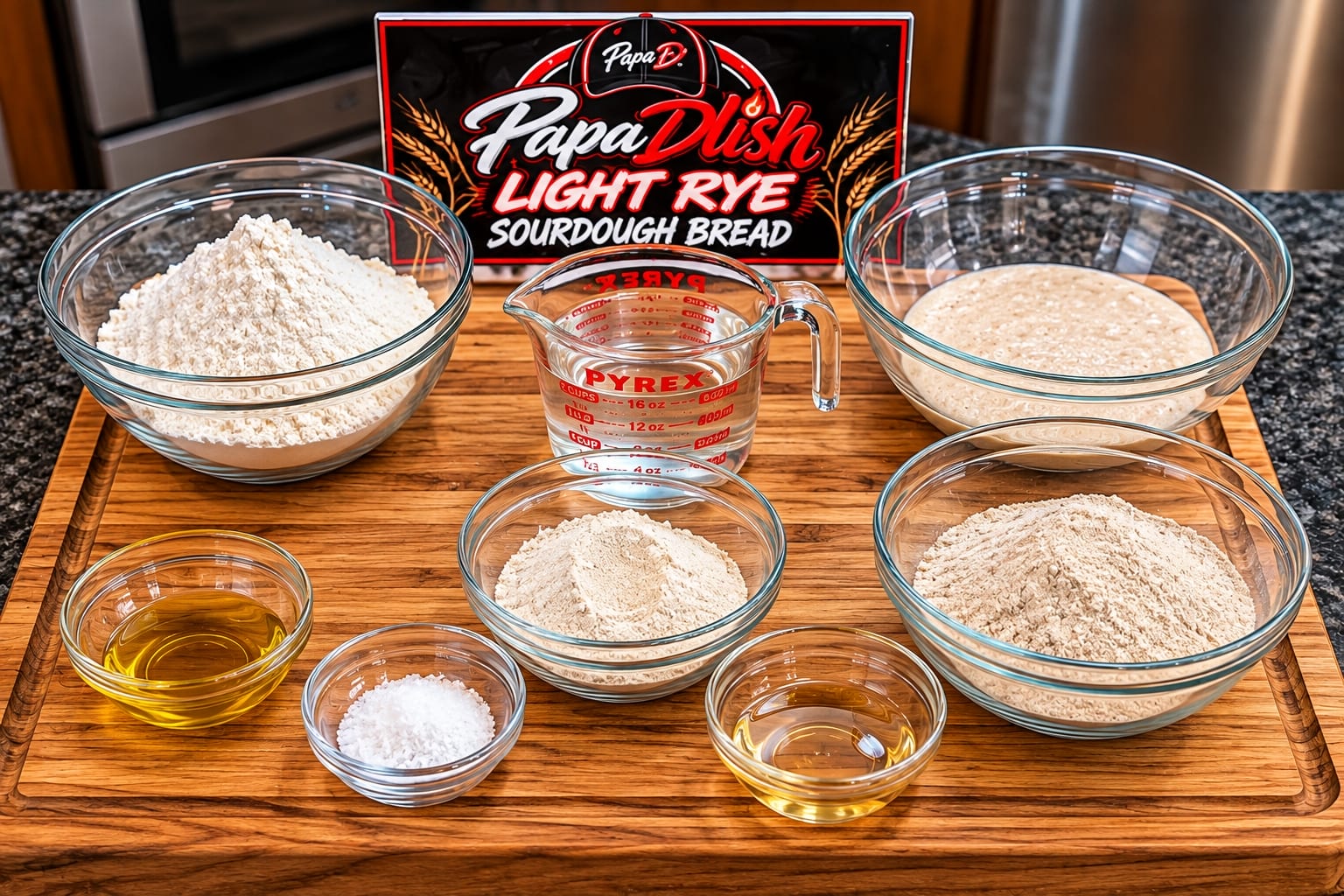
| 140 g | rye flour |
| 60 g | whole wheat flour |
| 300 g | bread flour |
| 365 g | water (hold back 10 g initially) |
| 150 g | active sourdough starter (100% hydration) |
| 15 g | honey |
| 15 g | neutral oil |
| 11 g | salt |
| 1,056 g | Total dough |
Baker’s note: Total flour is 575 g and total water 440 g when the 150 g starter is 100% hydration. Actual rye percentage depends on the flour used to feed the starter.
Directions
- Mix the flours with 355 g of the water until no dry flour remains. Rest 20–30 minutes to hydrate the rye and whole wheat.
- Add the active starter, honey, oil and salt. Mix thoroughly. Add the reserved 10 g water if the dough can handle it.
- Bulk ferment the covered dough for approximately 4 hours in an 82°F proofer, as in the successful test bake. Look for about a 75% rise and a visibly domed top; the dough may look close to doubled. Judge readiness by the dough’s appearance and rise as well as elapsed time. Dough temperature and the exact stretch-and-fold schedule were not recorded.
- Turn out the dough, shape into a taut round boule without aggressively degassing, and place seam-up in a lightly rice-floured banneton.
- Cover and refrigerate for 12 hours at 38°F for the final proof, matching the successful bake. Keep the dough supported in its banneton.
- Turn cold dough onto parchment. Dust with white rice flour if desired and make one deliberate expansion score about ⅜ inch deep.
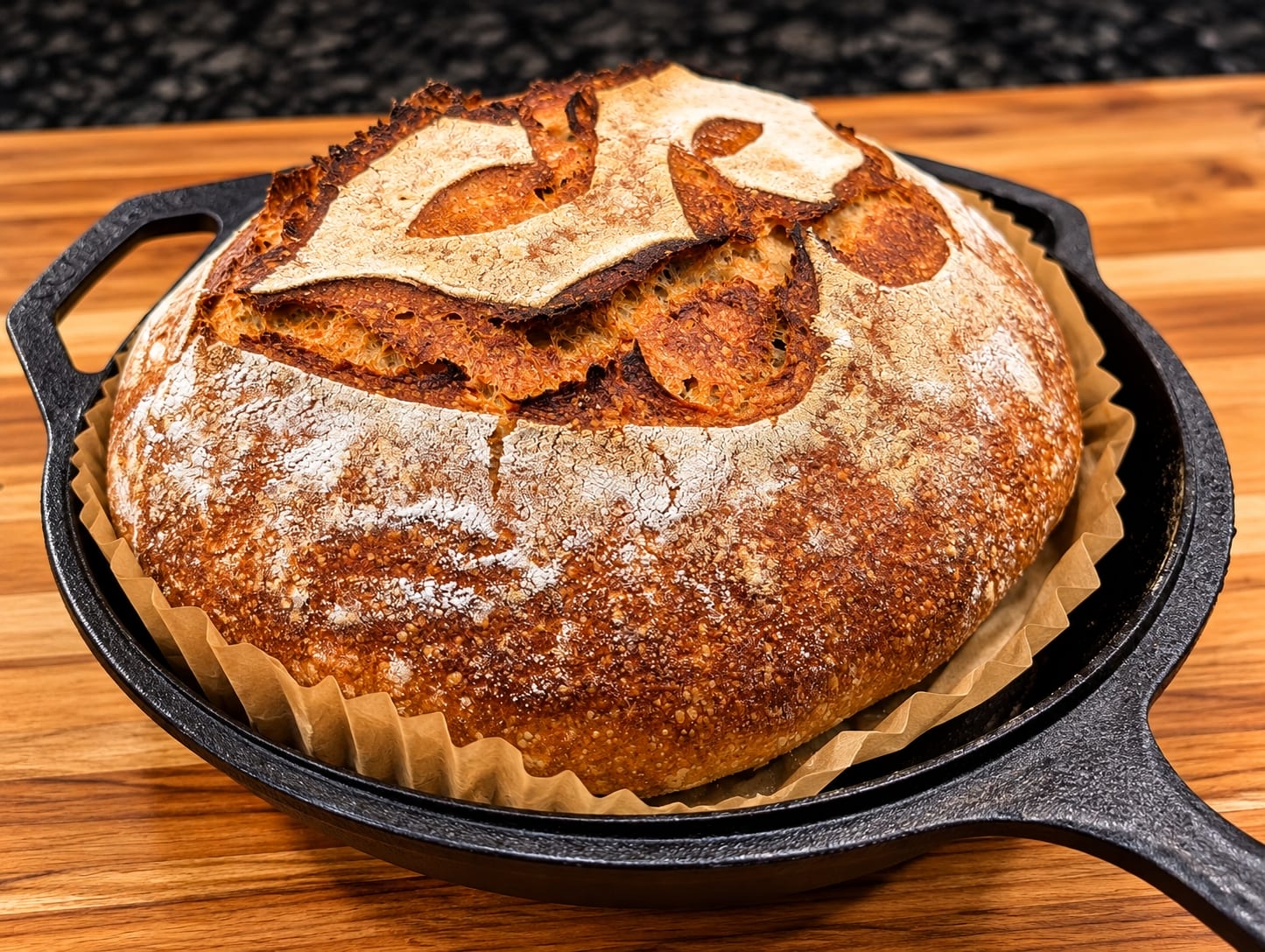
- Place dough and parchment into a room-temperature, cold-start-safe Dutch oven, cover, and place in a cold oven. Set oven to 450°F; bake covered about 45–50 minutes including preheat, checking from 40 minutes. Remove lid, lower to 425°F and bake roughly 10–15 minutes more until well browned and center reaches about 205–210°F. Adjust to your oven.
- Cool completely on a rack, preferably 3–4 hours before slicing, for the rye crumb to set.
PapaDlish Tips
- For a visible white flour pattern, lightly dust the cold loaf with rice flour before scoring.
- A continuous expansion score around ⅜ inch deep can help direct oven spring; proofing also matters.
- Cold-start Dutch oven and controlled expansion: Starting the scored loaf in a cold Dutch oven lets the dough and oven warm together, which may allow more gradual expansion before the crust sets. Baking covered traps steam and helps keep the surface flexible during early oven spring. Proper proofing and scoring are still essential for directing expansion; a cold start does not guarantee greater oven spring than a preheated Dutch oven.
- Keep the dough cold for scoring, and check the loaf early because cold-start oven timing varies.
- Allow a full cool before slicing so the rye crumb sets cleanly.
Papa D’s Test Kitchen Notes — Cold vs. Hot Dutch Oven
In previous tests using a preheated Dutch oven, I’ve experienced uncontrolled expansion and blowouts along the sides of my sourdough loaves. Switching to a cold-start Dutch oven has given me better results, allowing the dough to heat more gradually and expand more predictably through the scoring.
While a cold start isn’t guaranteed to prevent blowouts, it’s become my preferred method for achieving a more controlled rise and a cleaner-looking loaf.
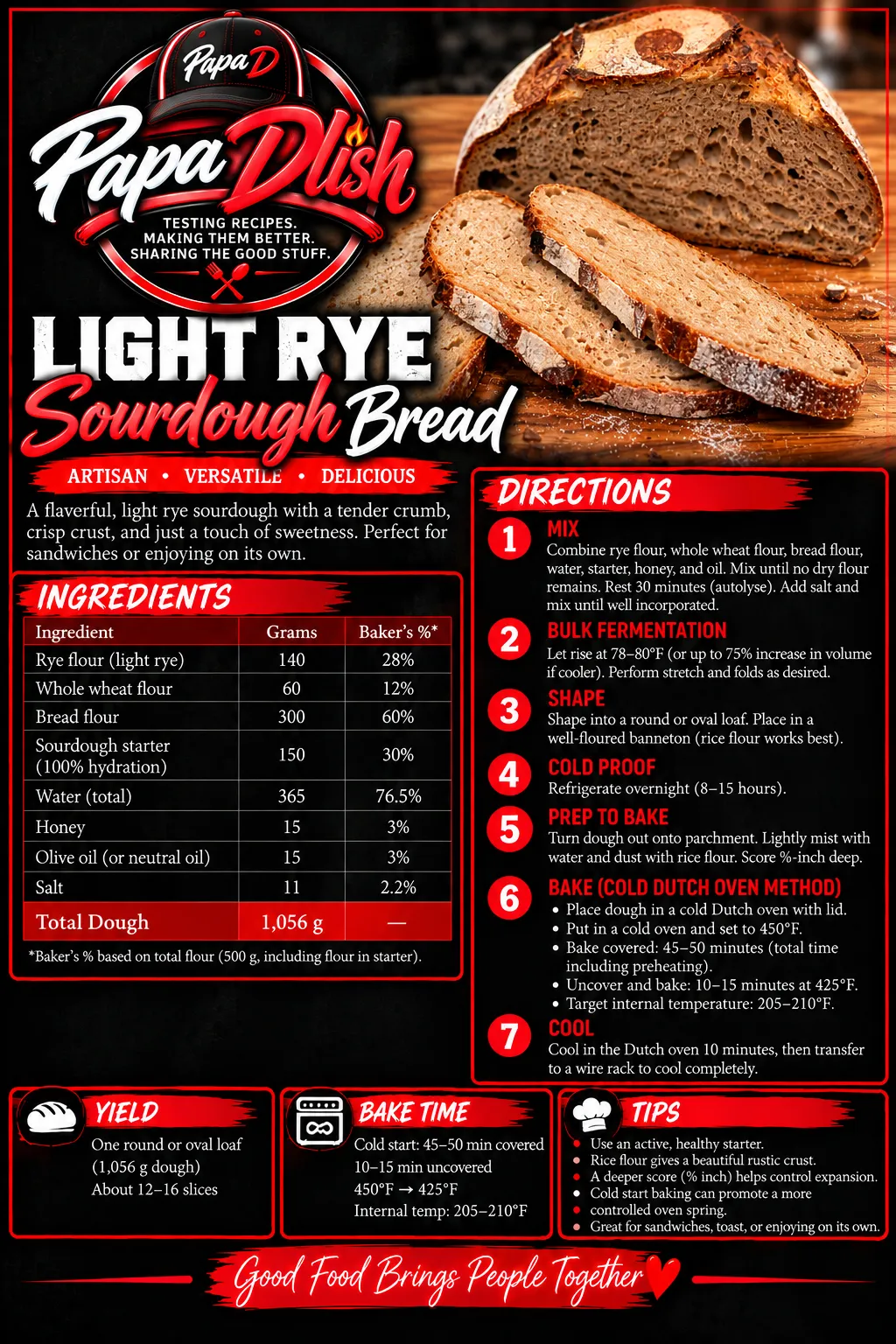
Save the PapaDlish Recipe Card
Estimated Nutrition
Approximately 2,220 calories per loaf, or about 139 calories if sliced into 16 equal portions. Estimates depend on flour and starter composition; this is not laboratory-verified nutrition labeling.
Fiber depends strongly on whether the rye flour is light, medium or whole grain. A precise fiber estimate requires the actual flour nutrition labels.
Made This Recipe?
Tell Papa D how your loaf turned out, and explore more tested breads and sourdough recipes.
Leave a Reply